
How Jakarta and Singapore Are Redefining Resilience Amid a Climate Crisis
- account_circle Pramono Pido
- calendar_month Senin, 30 Mar 2026
- visibility 91
- print Cetak

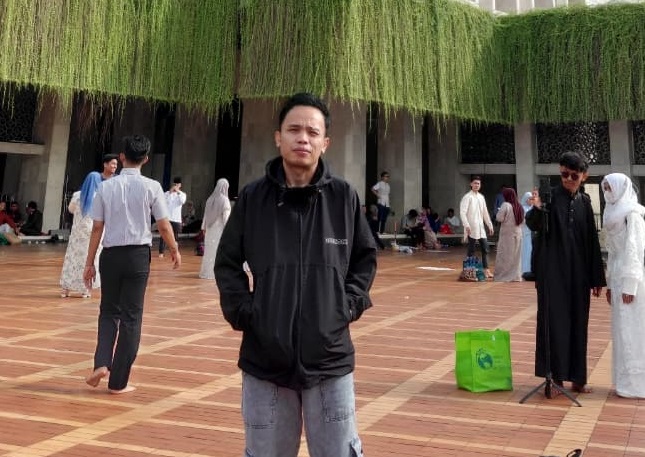
Foto Pramono Pido, penulis.
info Atur ukuran teks artikel ini untuk mendapatkan pengalaman membaca terbaik.
A comparative analysis of Jakarta and Singapore reveals distinct limitations in urban resilience. Jakarta contends with pronounced environmental risks and uneven development, whereas Singapore encounters more nuanced challenges related to governance and civil liberties. These cases illustrate that resilience is inherently multidimensional. Physical infrastructure alone is insufficient, and technological efficiency without social trust remains vulnerable.
Empirical research consistently demonstrates that robust social bonds are essential during crises. During floods or severe weather events, communities often depend more on neighbors than on formal institutions. Mutual support and shared responsibility can substantially mitigate damage. Consequently, effective resilience strategies must prioritize both social cohesion and physical infrastructure.
In Jakarta, applying these insights may involve expanding access to secure housing, enhancing basic services, and fostering community participation in urban planning. For Singapore, resilience could be strengthened by ensuring transparency in data governance and facilitating public discourse on the ethical boundaries of surveillance technologies. In both contexts, achieving resilience requires balancing safety considerations with principles of fairness.
Ultimately, addressing the climate crisis requires more than technical expertise. Although data systems, smart sensors, and predictive models are valuable, their effectiveness depends on broader social and political frameworks. Without inclusive policies, technological advancements may inadvertently exacerbate inequality. Similarly, prioritizing efficiency without ethical safeguards can undermine democratic values.
Smart cities must transcend reliance on technological solutions alone. The experiences of Jakarta and Singapore demonstrate that urban safety depends on integrating scientific knowledge, social justice, and accountable governance. Resilience should be understood as a continuous process of adaptation, collaboration, and trust-building.
Penulis : Mahasiswa di Lembaga Bahasa Internasional Universitas Indonesia
- Penulis: Pramono Pido






















Saat ini belum ada komentar